Career readiness starts with communication, confidence, and taking action.
By Kahit Kabado® Team | Photo by James Matias
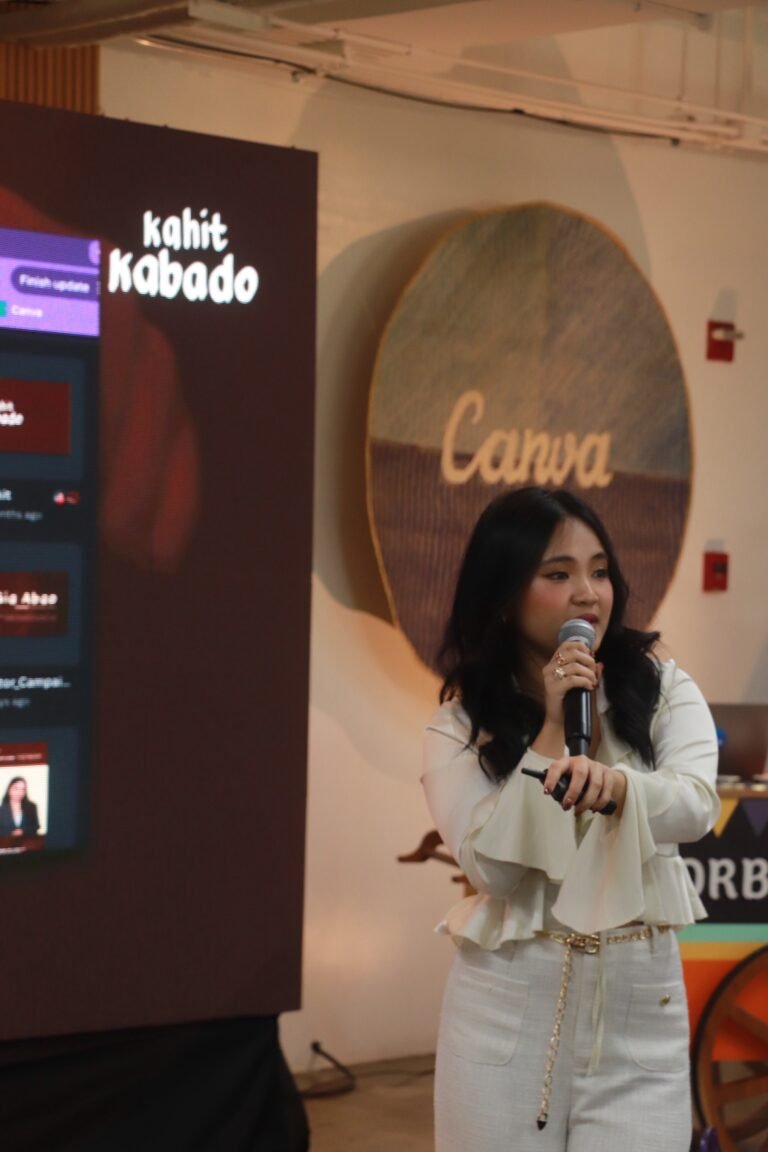
There is something powerful about hearing someone speak honestly about growth, especially when they acknowledge that confidence does not always come first.
At the Canva Design Your Future, Gia Abao stepped onto the stage not just as a panelist, but as a voice that resonated deeply with young people navigating uncertainty. Her message was not about having everything figured out. It was about becoming career-ready even while feeling unsure.
During the panel discussion, Gia shared practical insights on how students and young professionals can better prepare themselves for the realities of the working world. Instead of overwhelming the audience with complex strategies, she focused on three essential skills that anyone can start building today: communication, portfolio development, and sales. These are not just technical abilities. They are life skills that shape how opportunities come and how people respond to you.
The first tip she emphasized was learning the value of communication. For Gia, communication is more than just speaking well. It is about expressing your ideas clearly and confidently, even when you feel nervous. Many people assume that talent alone is enough to succeed, but she pointed out that without communication, your skills can go unnoticed.
In real-world settings, communication is what allows you to present your ideas, answer questions effectively, and connect with others. Whether it is during a job interview, a class presentation, or a casual networking moment, how you communicate can shape how others perceive your potential. Gia highlighted that strong communication skills help you “sell yourself better,” not in a superficial way, but in a way that allows others to understand your value.
For many in the audience, this was a reminder that being quiet or unsure does not mean you lack ability. It simply means there is a skill to be developed. Communication, like any other skill, improves with practice. Speaking up, even when your voice shakes, is part of becoming more confident over time.
Her second piece of advice centered on building a portfolio. In a world where competition is high and attention spans are short, having proof of your work matters. Gia encouraged the audience not to wait until they feel “ready enough” before creating a portfolio. Instead, she urged them to start now, using whatever projects or outputs they already have.
A portfolio is more than just a collection of work. It is a reflection of your growth, your creativity, and your initiative. It shows people what you are capable of, even before you say a word. For students, this could mean compiling school projects, passion projects, or freelance work. For creatives, it could be sharing designs, writing samples, or content online.
Gia emphasized that your portfolio does not need to be perfect. In fact, it should evolve as you grow. Early work might feel simple or imperfect, but it represents your starting point. Over time, as you refine your skills, your portfolio becomes a powerful narrative of your journey. It tells a story of progress, effort, and willingness to learn.
The third tip she shared challenged a common misconception among young people: the idea that sales is only for business-minded individuals. Gia reframed this entirely. She explained that learning sales early is one of the most valuable skills anyone can develop, regardless of their career path.
Sales is not just about selling products. It is about presenting ideas, building trust, and creating opportunities. Every time you introduce yourself, apply for a role, or pitch a concept, you are engaging in some form of sales. Understanding how to position yourself and communicate your value can open doors that might otherwise remain closed.
By learning sales early, you develop confidence in advocating for yourself. You learn how to handle rejection, how to negotiate, and how to connect with people in meaningful ways. These are skills that extend far beyond traditional business roles. They are relevant in creative industries, corporate environments, and even personal branding.
After the panel discussion, Gia returned to the stage for a 15-minute keynote that tied all her insights together. If the panel offered practical advice, the keynote delivered something deeper: perspective. She spoke about the reality that most people feel unprepared at some point in their journey. The difference lies in whether you choose to move forward despite that feeling.
Her message resonated strongly with the spirit of Kahit Kabado. You do not need to eliminate fear before taking action. You simply need to take the step anyway. Career readiness is not a destination you suddenly arrive at. It is something you build gradually, through small, consistent efforts.
Gia reminded the audience that opportunities are not reserved for those who feel the most confident. They are often taken by those who are willing to try, learn, and grow. By practicing communication, building a portfolio, and understanding sales, you create a strong foundation that supports you in any path you choose.
As the event came to a close, one thing became clear. Being career-ready is not about having a perfect plan. It is about equipping yourself with the right skills and mindset to navigate whatever comes your way.
And sometimes, the most important step is the simplest one: showing up, even when you are still figuring things out.
Kahit kabado, puwede.